
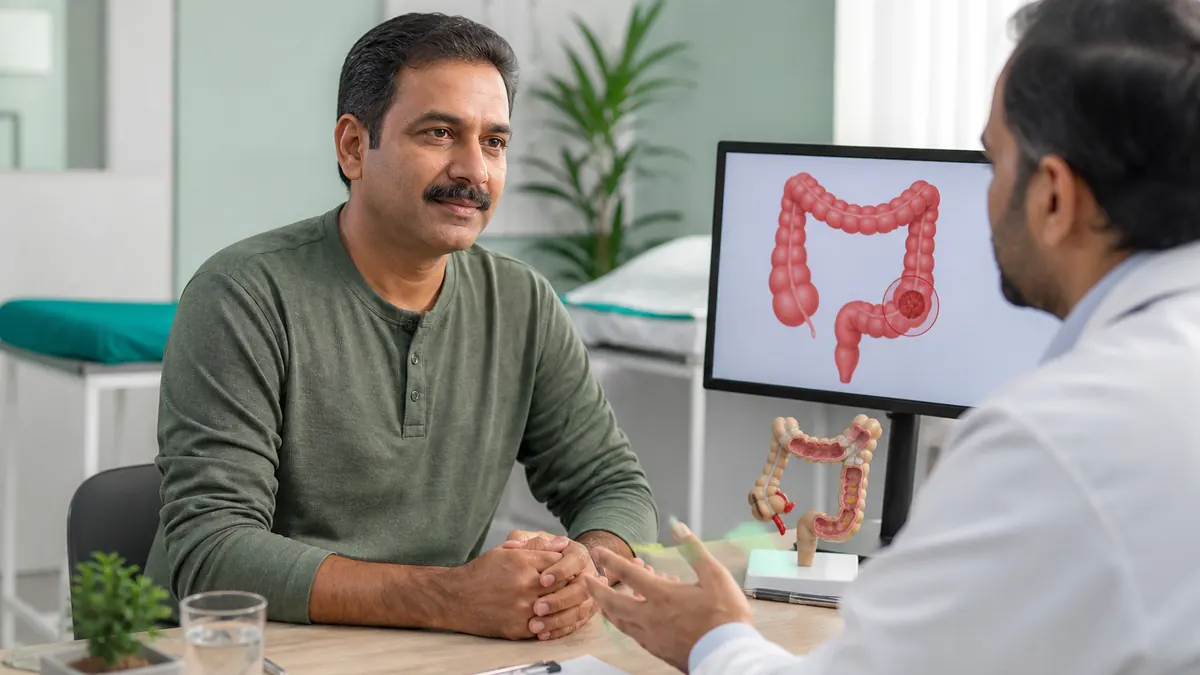
Who should consider colon screening
Average-risk adults often begin discussion around mid-40s to 50. Earlier screening may be needed with family history of colon cancer or polyps, or with alarm symptoms such as bleeding or unexplained anaemia.
What prep involves
Bowel cleansing with a prescribed preparation and a clear-liquid period before the test. Good prep means a clearer exam and fewer repeat procedures — follow instructions carefully.
What to expect on the day
Sedation is commonly used. The colon is examined for polyps or inflammation. Polyps can often be removed during the same procedure when appropriate.
Alarm symptoms — do not wait for “screening age”
- Blood in stool or black stools
- New change in bowel habit after 40
- Unexplained weight loss or iron-deficiency anaemia
Why prep quality matters
Incomplete cleansing hides polyps behind stool residue and may force a repeat test. Stay near a bathroom during prep, follow the timing exactly, and call the team if you vomit the preparation or cannot complete it.
Polyps explained simply
Polyps are growths on the colon lining. Many are benign, but some can slowly turn into cancer over years. Removing them during colonoscopy is both diagnosis and prevention.
Family history — what to tell your doctor
Share ages at diagnosis for parents or siblings with colon cancer or advanced polyps. That information can move your first screening earlier and set closer follow-up intervals.
Aftercare and follow-up interval
Mild bloating after the procedure is common. Contact the clinic for heavy bleeding, severe pain or fever. Your next colonoscopy date depends on what was found — keep the report in your health file.
Areas we serve
Frequently asked questions
01 At what age does colon screening start?
Often 45–50 for average risk; earlier with family history or alarm symptoms.
02 Is colonoscopy painful?
With sedation, most people tolerate it well. You will receive clear after-care instructions.
03 How long is recovery?
Many return to light activity the next day; avoid driving on the day of sedation.
04 What if polyps are found?
They are often removed and sent for analysis. Follow-up interval depends on findings.
05 Are there alternatives to colonoscopy?
Stool-based tests exist for some screening situations, but colonoscopy remains the most complete exam when indicated.
06 Where is screening discussed in Kokapet?
Jade Clinics, 3rd floor MN Crux, above KFC, Kokapet–Narsingi, Hyderabad 500075. Mon–Sat 5:30–7:30 PM. Call +91 63022 69348.